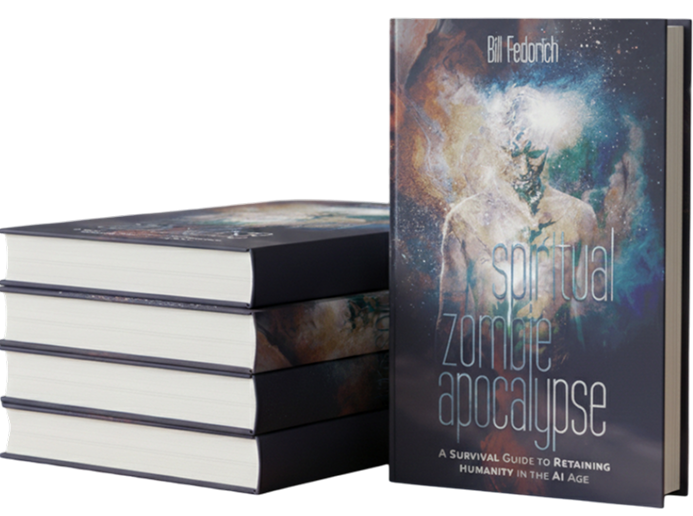



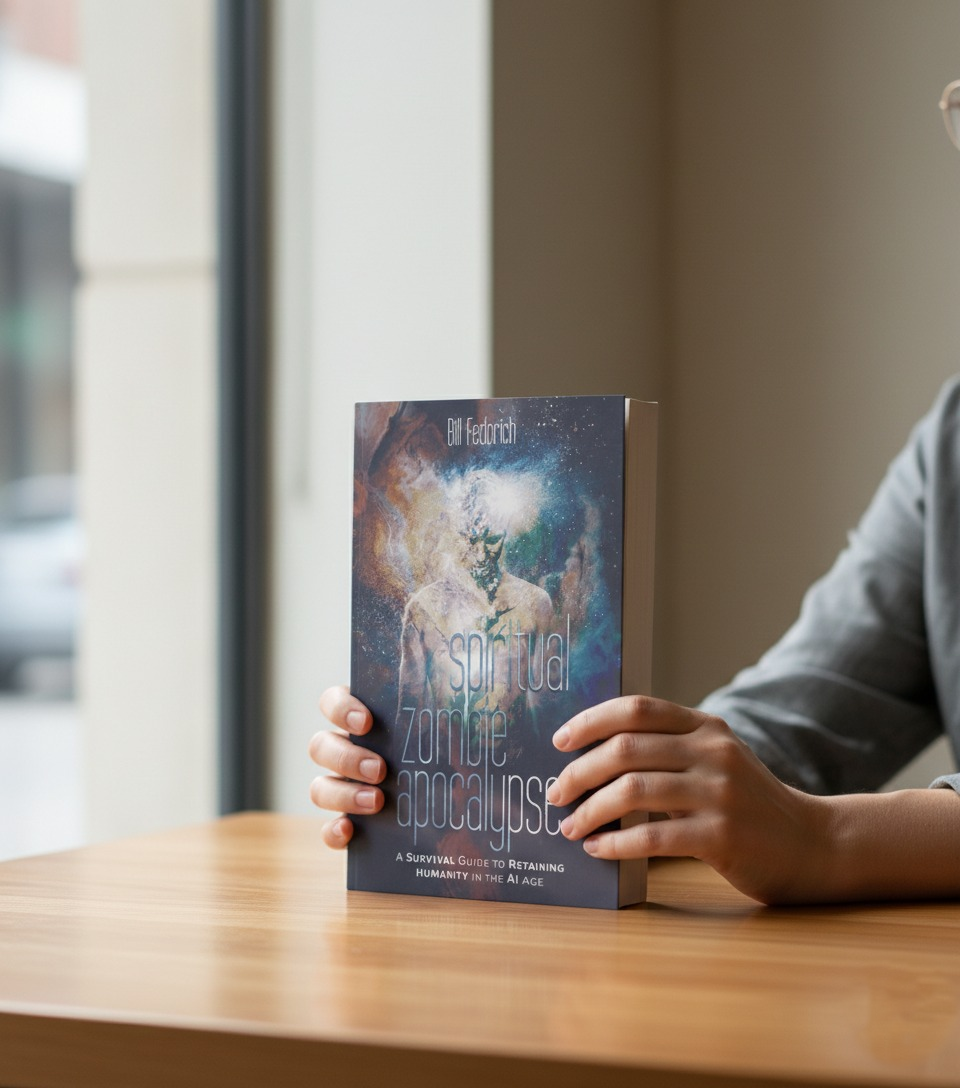
- Spiritual Zombie Apocalypse
A Survival Guide To
Retaining Humanity In The AI Age.
They move through their days reacting, scrolling, consuming, deciding, yet something inside feels thinner than it used to. Not worse. Just… less present.
This Book - Exists For People Who Recognize That Feeling.
Not because technology is evil. But because modern systems train attention in ways the human nervous system was never built for. This is a guide to noticing what has changed, and what it is quietly costing you.
What Readers Begin to Notice?
Not because they are told what to do or guided by instructions, but because they slow down enough to notice again. Attention returns in small moments—between breaths, between thoughts—until awareness feels natural, not forced. It begins quietly, simply, with paying attention once more.

Mass media and AI are designed to provoke. This book teaches readers to notice when words are being used to pull them instead of inform them.
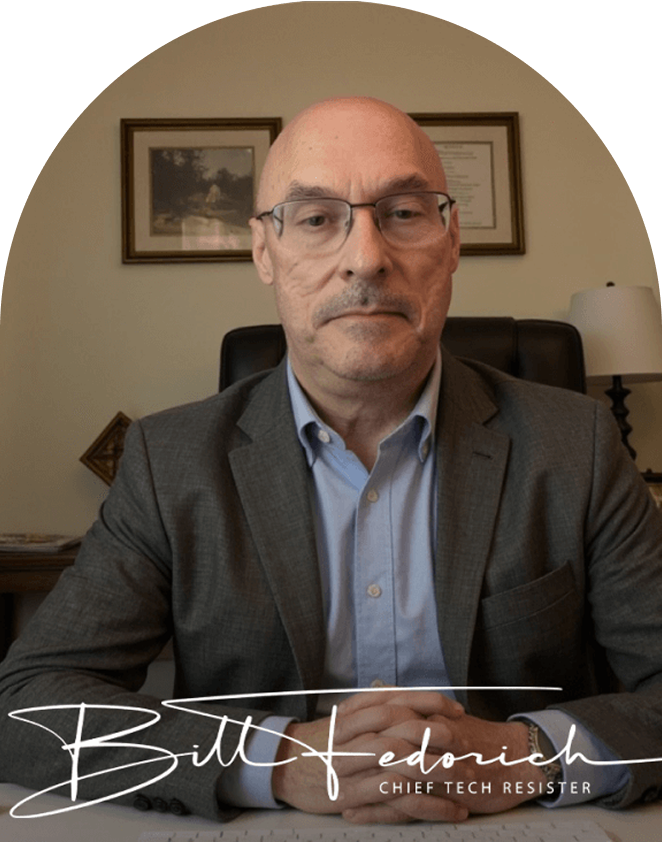
About the Author - Bill Fedorich
Bill Fedorich has spent decades working at the intersection of technology, systems, and human behavior. Before most people were talking about algorithms, AI, or attention economics, he was already watching how tools, media, and institutional incentives quietly change the way people think, speak, and relate to one another. His work focuses on what rarely makes headlines: the second and third order effects of modern systems on attention, language, decision-making, and the inner life. Bill is not a futurist, a preacher, or a productivity coach. He does not sell platforms, software, or solutions.
He studies patterns in how:
● Emotionally charged language reshapes belief.
● Convenience erodes presence.
● Automation slowly trains people out of reflection.
Spiritual Zombie Apocalypse grew out of years of observing these shifts in everyday life, in organizations, and in himself. The book is not a theory. It is a record of what happens when human awareness is placed inside systems that were never designed to protect it. Many readers say they did not feel persuaded by the book. They felt recognized. That is the point.
Make Time Really Works.
Time isn’t disappearing—it’s being shaped. Modern systems don’t just fill our schedules; they train how we experience focus, urgency, and rest. This section explores how time actually works in practice, and why reclaiming it starts with understanding attention, not productivity hacks.
Daniel Moore
This book didn’t just give me ideas—it changed how I notice my own life. The writing is calm, precise, and deeply human. I found myself slowing down, rereading passages, and actually feeling present again. It’s rare to find a book that stays with you long after the last page.
Some People Read It And Move On. Some Stay And Go Deeper. Both Are Fine.
This book does not demand agreement, loyalty, or continuation. It exists to meet people where they are, to offer language, clarity, and space to notice what may be happening beneath the surface of everyday life. Nothing more is required.
Why the Book Is Offered at Cost?
This book is not priced to maximize revenue. It is priced to remove friction. Most people who find this work are not looking for entertainment, motivation, or ideology. They are trying to understand something they already feel, that modern life has quietly changed the way attention, language, and meaning work.
The easiest way to stop that kind of inquiry is to make it feel like a sales pitch. So the book is offered at the cost of printing, fulfillment, and shipping only. No margin. No funnel tricks. No psychological pressure.